
The 2026 tax season is officially here, and the days of “flying under the radar” are over. With the IRS deploying new AI-driven algorithms to scan 2025 returns, getting flagged has never been easier.
While the overall audit rate is still low for average earners, the Automated Underreporter (AUR) system is ruthlessly efficient. It doesn’t sleep, and it spots discrepancies in seconds.
Most audits aren’t triggered by malice; they are triggered by simple, avoidable patterns that look suspicious to a computer. Here are the top five red flags to avoid, including one common habit (#3) that practically begs for an examination.
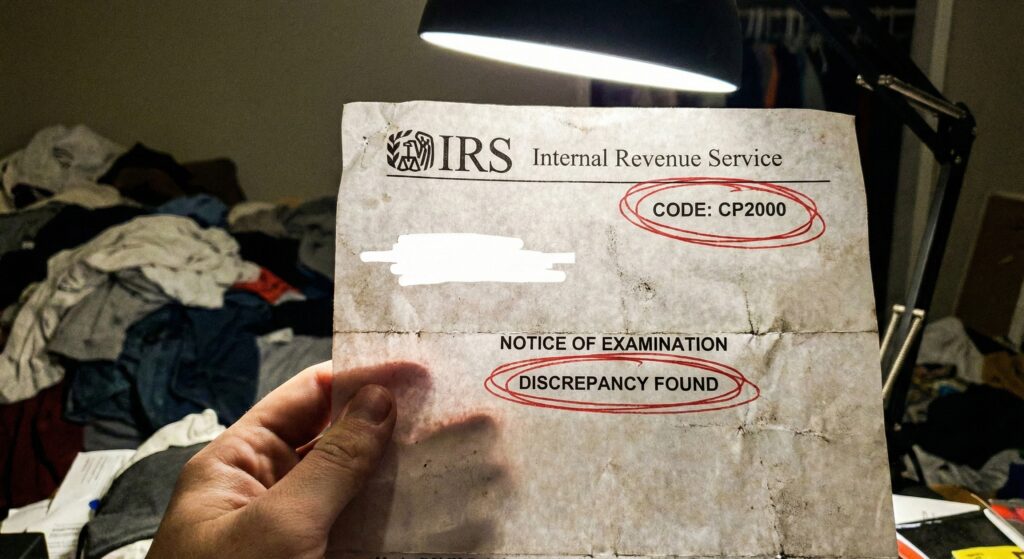
1. The “Ghost” Income (Unreported 1099s)
The IRS supercomputer matches every Form W-2, 1099-NEC, 1099-K, and 1099-INT tied to your Social Security number against what you report.
- The Trap: You make $800 on a side gig and don’t report it because “it’s small.”
- The Reality: If the company filed a 1099, the IRS already knows about it. You will automatically receive a CP2000 Notice demanding the tax plus interest.
- Fix: Wait for all forms before filing. Check your IRS Transcripts if you aren’t sure what the IRS has on file.
2. The “Hobby” Loss (Schedule C)
Do you have a side business that hasn’t made a profit in three years? If you keep claiming losses to offset your W-2 income, the IRS may reclassify your business as a “Hobby.”
- The Risk: You lose all those deductions retroactively and owe back taxes.
- The Rule: You generally need to show a profit in 3 out of 5 years to prove you are running a legitimate business, not just funding a passion project.
3. The “00” Trap (Rounding Numbers)
Never do this.
If your return shows $12,000 for advertising, $3,000 for supplies, and $500 for travel, you are painting a target on your back.
- Why? Real life isn’t round. Life costs $12,142.55, not $12,000.
- The Trigger: Round numbers signal to the IRS that you are estimating (guessing) rather than using actual records. It is one of the easiest patterns for their algorithms to spot.
4. Excessive Deductions (The DIF Score)
The IRS assigns every return a Discriminant Information Function (DIF) score. If your deductions are wildly out of sync with others in your income bracket, your score spikes.
- Example: Making $60,000 but claiming $45,000 in charitable donations.
- Reality: You can claim high deductions if they are real, but you must have bulletproof receipts to back them up.
5. The 100% Business Vehicle
Claiming you use your personal car 100% for business is almost statistically impossible unless you own a second car strictly for personal use. The IRS knows you drive to the grocery store.
- Safe Bet: Claim the actual percentage (e.g., 85% business, 15% personal) and keep a detailed mileage log.
“Safe” vs. “Risky” Filing Habits
| Red Flag Category | 🟢 Safe Habit | 🔴 Risky Habit |
| Income | Wait for all 1099s/W-2s. | Guessing amounts early. |
| Expenses | Exact numbers ($142.50). | Round numbers ($150.00). |
| Vehicle | Logged mileage (82% biz). | 100% Business Use claim. |
| Home Office | Exclusive workspace only. | Kitchen table / Guest room. |
Bottom Line: Accuracy is your best defense. If you do receive a notice, don’t panic—read it carefully and respond immediately. For more details on the process, visit the official IRS Audit FAQs page.
Disclaimer: This article is for informational purposes only. Always consult official government resources.

Evan Cole Editor-in-Chief | Breaking News & Public Policy
“From Washington to Wall Street, and Main Street to Hollywood—Evan Cole connects the dots.”
As the Editor-in-Chief at Newskilo, Evan leads a dynamic team of journalists dedicated to uncovering the truth behind the headlines. With over 15 years in digital media, Evan has a reputation for cutting through the noise.
While he is widely recognized for his deep analysis of U.S. fiscal policy (IRS & Stimulus), Evan’s expertise extends to global current events, corporate accountability, and cultural trends. Whether he is breaking down a complex government bill, exposing a tech giant’s failure, or analyzing the societal impact of a viral celebrity moment, Evan’s goal is simple: To tell the stories that shape our world with clarity, accuracy, and integrity.