
Tax season is peak hunting season for criminals. As millions of Americans wait for refunds averaging over $3,000, scammers are flooding phones and inboxes with sophisticated traps designed to steal that money before it hits your bank.
Here is the Bottom Line Up Front:
The IRS does not initiate contact with taxpayers by email, text messages, or social media to request personal or financial information. If you receive a message telling you to click a link to “claim your refund,” it is a scam. Delete it immediately.
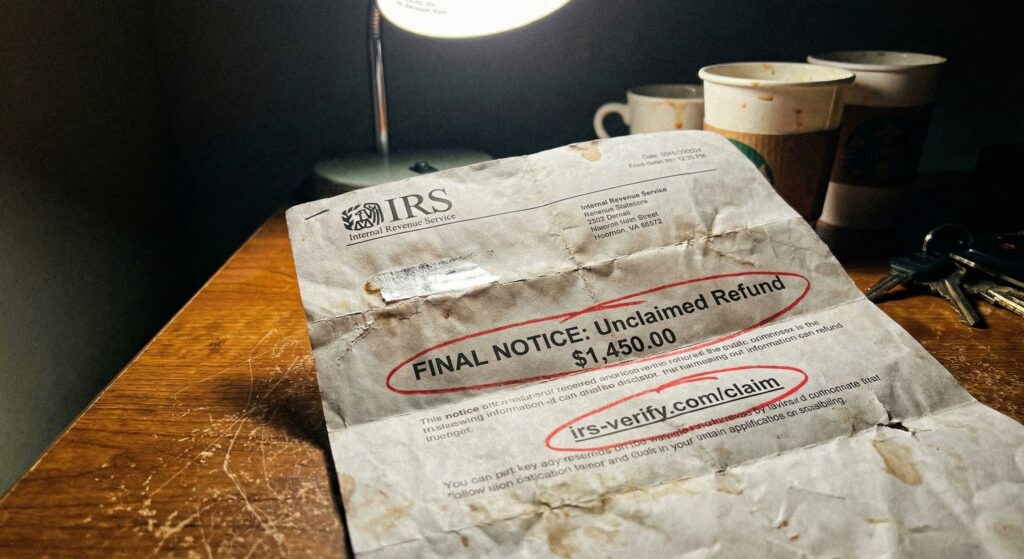
This Q&A breakdown covers the latest threats circulating during the 2026 filing season.
Q: How can I immediately spot a fake IRS message?
A: It comes down to the method of contact. The real IRS operates slowly and formally. Their first point of contact is almost always an official letter delivered by the U.S. Postal Service.
Red Flags:
- Demands for immediate payment using gift cards or cryptocurrency.
- Threats of immediate arrest or deportation.
- Links to non-governmental websites (anything that doesn’t end in
.gov).
Q: What is the top scam currently circulating?
A: The “Unclaimed Refund” digital lure. You receive a text or email that looks eerily official, claiming you have a pending deposit that is “stuck.”
Example Scam Text:
“IRS Alert: Your tax refund of $1,450.50 is pending acceptance. You must verify your bank details within 24 hours to avoid cancellation. Click here: [fake-link.com]”
If you click that link, you are taken to a fake portal designed to harvest your Social Security number and banking credentials so they can redirect your real refund to their accounts.
Real vs. Fake IRS Behavior
| Action | Real IRS | Scammer (Fake IRS) |
| Initial Contact | U.S. Mail Letter | Text, Email, or Robocall |
| Payment Demands | Sends bill, allows appeal | Demands immediate payment |
| Payment Methods | Check, Direct Pay (Bank) | Gift Cards, Crypto, Wire Transfer |
| Asking for Info | Rarely asks for PINs/Passwords | Demands passwords/SSN via link |
Q: What should I do if I already clicked a suspicious link?
A: Act immediately. Time is critical.
- Contact your bank to secure your accounts.
- Place a fraud alert or credit freeze with the major credit bureaus.
- Apply for an Identity Protection PIN (IP PIN) with the IRS to prevent future tax-related identity theft.
You should also report the attempt to the Treasury Inspector General for Tax Administration (TIGTA) through their official channel at TIGTA.gov.
Disclaimer: This article is for informational purposes only and does not constitute financial or legal advice. Always consult official government resources.

Evan Cole Editor-in-Chief | Breaking News & Public Policy
“From Washington to Wall Street, and Main Street to Hollywood—Evan Cole connects the dots.”
As the Editor-in-Chief at Newskilo, Evan leads a dynamic team of journalists dedicated to uncovering the truth behind the headlines. With over 15 years in digital media, Evan has a reputation for cutting through the noise.
While he is widely recognized for his deep analysis of U.S. fiscal policy (IRS & Stimulus), Evan’s expertise extends to global current events, corporate accountability, and cultural trends. Whether he is breaking down a complex government bill, exposing a tech giant’s failure, or analyzing the societal impact of a viral celebrity moment, Evan’s goal is simple: To tell the stories that shape our world with clarity, accuracy, and integrity.