
For the past two years, SNAP recipients had a safety net: if criminals drained your EBT card via a skimming device, the federal government (USDA) would replace the stolen funds. That protection has officially expired.
As we approach the March 1st deposit cycle—the biggest target date for theft rings—millions of families are now financially exposed. If your benefits are stolen this month, there is a high probability you will not get them back.
Here is the Bottom Line Up Front: The federal provision that funded stolen benefit replacement sunsetted in late 2025. Unless your specific state has passed emergency legislation to cover the costs (most have not), a “0.00” balance is now permanent. Your only defense is to “Lock” or “Freeze” your card immediately through your state’s official EBT app.
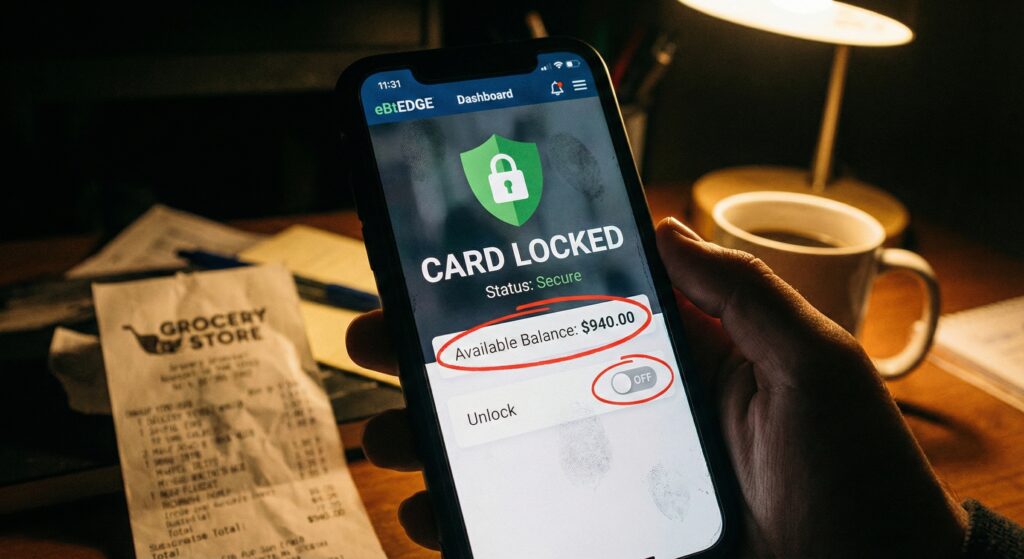
The “March 1” Danger Zone
Criminals know the schedule. They install skimmers on point-of-sale terminals in late February, capture thousands of card numbers, and wait.
- The Attack: The moment deposits hit at 12:01 AM on March 1, their bots automatically drain the accounts before you even wake up.
Why Reimbursement is Denied:
- 2023-2024: Federal law allocated money to replace stolen benefits.
- 2026 Reality: That funding stream has dried up. State agencies are sending “Claim Denied” letters citing “Lack of Federal Authority.”
How to “Lock” Your Card (The Only 100% Defense)
You do not need a new card to do this. You just need the app.
- For Most States: Download eBtEDGE or ConnectEBT (check the back of your card).
- For California/Texas: Use the MyBenefits CalWIN or Your Texas Benefits app.
The “Zero-Trust” Strategy:
- Log In: Register your card in the app.
- Find the Toggle: Look for “Protect My Card,” “Freeze,” or “Lock Account.”
- Keep it LOCKED: Leave the card locked 24/7.
- Unlock to Pay: Only slide the toggle to “Unlock” when you are physically standing at the register.
- Re-Lock Immediately: Lock it again before you walk out of the store.
Critical Note: A locked card rejects all transactions, including the thieves’ attempts. It does not stop your monthly deposit from arriving.
State-Funded Exceptions
A handful of states have stepped up to fill the gap with their own money. If you live in Maryland, Massachusetts, or California, you may still have partial coverage under state law. For everyone else—especially in states like Florida, Texas, and Georgia—you are likely on your own.
Disclaimer: This article is for informational purposes only. Always consult your local SNAP office.

Evan Cole Editor-in-Chief | Breaking News & Public Policy
“From Washington to Wall Street, and Main Street to Hollywood—Evan Cole connects the dots.”
As the Editor-in-Chief at Newskilo, Evan leads a dynamic team of journalists dedicated to uncovering the truth behind the headlines. With over 15 years in digital media, Evan has a reputation for cutting through the noise.
While he is widely recognized for his deep analysis of U.S. fiscal policy (IRS & Stimulus), Evan’s expertise extends to global current events, corporate accountability, and cultural trends. Whether he is breaking down a complex government bill, exposing a tech giant’s failure, or analyzing the societal impact of a viral celebrity moment, Evan’s goal is simple: To tell the stories that shape our world with clarity, accuracy, and integrity.