
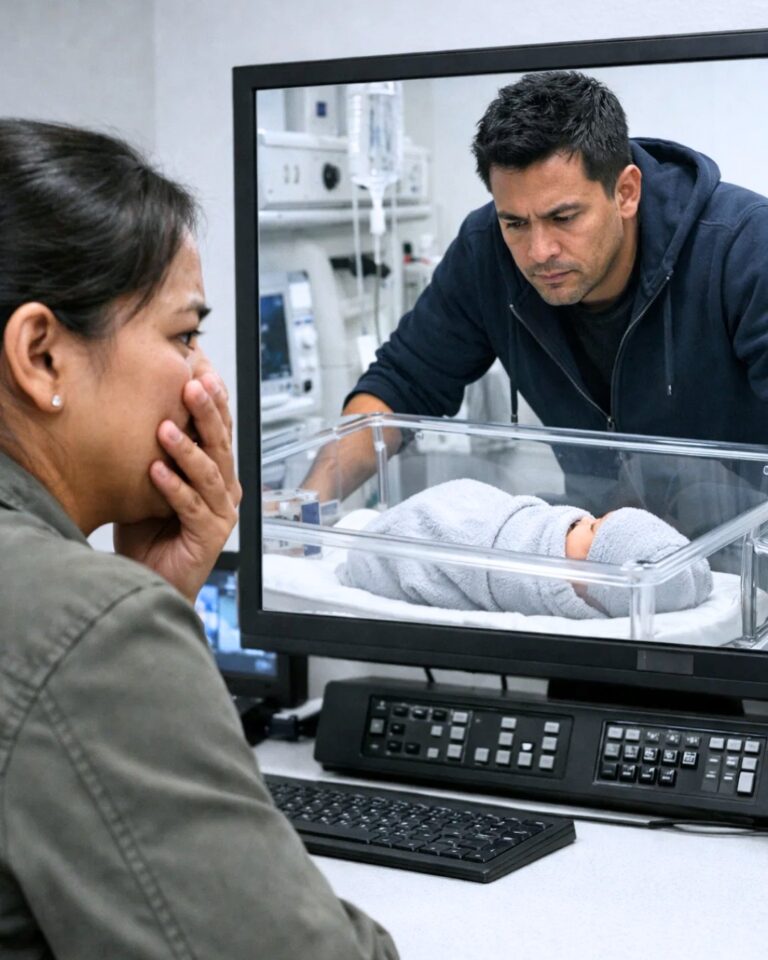
The day my baby died, my husband looked me straight in the eyes and blamed my blood.
Not the doctors. Not fate. Not the God we had both begged for mercy. Me.
Our son, Liam, had been fighting for his life in the NICU for days.
The room smelled like harsh bleach, warm plastic, and false hope.
Machines kept singing their cold, mechanical song while I stood there believing that if I loved him fiercely enough, somehow he would stay.
He didn’t.
The doctors told us it was a rare genetic condition, aggressive and irreversible.
But Daniel’s voice cut through everything else. “Your defective genes killed our son.”
He didn’t yell. He didn’t cry. He just said it like a verdict.
Three days later, he filed for divorce.
Just like that, I lost everything. My baby. My marriage. My suburban home in Portland.
For six years, I carried the guilt like a second skin.
Every sleepless night, every panic attack in a Target aisle, I told myself the same thing Daniel had told me: it was my fault.
Daniel remarried within a year to a much younger woman.
I disappeared into a tiny, damp apartment and survived on minimum-wage shifts.
Until an ordinary Wednesday afternoon, six years later.
My phone rang. The caller ID showed the exact hospital where my son had died.
My stomach dropped so fast I thought I might pass out.
“Mrs. Carter?” a woman asked. “This is Dr. Ellis from neonatal care. We need to speak with you.”
I sat down slowly, gripping the edge of my thrift-store table. “It’s been six years.”
There was a long pause. “We discovered something during an internal audit.”
My throat went dry. “What kind of discrepancies?”
When she answered, the entire world stopped spinning.
“Your son did not die from a genetic condition. Someone introduced a toxic substance into his IV line.”
“We have security footage that appears to confirm it.”
I couldn’t breathe.
Two hours later, I walked back into the hospital I swore I would never enter again.
Two Portland PD detectives led me into a small, windowless viewing room.
On the screen was a grainy paused image from the night Liam died.
“You need to prepare yourself,” the detective said, pressing play.
And when the video froze on the killer’s face, the air left my lungs.
Part 2: The Monster In The Frame
Because I knew that face.
It wasn’t a rogue nurse or a psychopathic doctor.
It was Daniel.
The grainy black-and-white video showed him walking into the NICU at 2:14 AM.
He was wearing his favorite green Seahawks hoodie.
He looked around the empty ward, his movements calm and sickeningly calculated.
Then, he pulled a small, unmarked syringe from his pocket.
I watched, paralyzed in the cheap plastic chair, as the man I married injected the clear liquid directly into Liam’s central line.
Within ninety seconds, Liam’s tiny chest stopped moving.
The monitors in the video began to flash, and Daniel quietly slipped out of the room just before the nurses rushed in.
I grabbed the metal trash can next to the desk and vomited violently.
“I’m so sorry, Mrs. Carter,” the older detective, Miller, said softly, handing me a paper towel.
“How?” I choked out, my throat burning. “How did no one see this six years ago?!”
Miller explained that back then, the hospital’s security servers were isolated and heavily fragmented.
The camera in Liam’s corner had been labeled as “defective” by an IT tech.
But a recent hospital-wide software migration unearthed thousands of supposedly corrupted files.
An AI protocol scanning for medical anomalies flagged the exact timestamp of Liam’s heart failure.
They cross-referenced Liam’s archived blood work using modern toxicology standards.
It wasn’t a genetic defect that stopped my son’s heart. It was a massive, lethal overdose of pure potassium chloride.
Part 3: The Depths Of Betrayal
My sadness instantly evaporated, replaced by a white-hot, blinding rage.
Six years.
For six years, Daniel had convinced me my body was broken. He watched me sob on the floor of our bathroom, begging for forgiveness.
He took the house, the savings, and his freedom, leaving me with nothing but a lifetime of trauma.
“Why?” I whispered, looking at Detective Miller. “Why would he do this?”
Miller pulled out a thick manila folder and slammed it onto the table.
“We pulled his financials from the month of the murder,” Miller said grimly.
Daniel had a massive trust fund from his late grandfather, but there was a strict clause attached to it.
The money could only be touched if he maintained a clean legal record and didn’t rack up insurmountable medical debt.
At the time, Liam’s NICU bills were skyrocketing past $400,000, and our insurance was threatening to pull coverage.
Daniel saw his inheritance slipping away to keep a sick baby alive.
But that wasn’t the worst part.
“He was also renting a luxury apartment downtown,” Miller said, sliding a photo across the table.
It was a picture of Daniel and his current wife, Jessica.
“He signed the lease with her three months before Liam was even born.”
He didn’t just want out of the medical bills. He wanted out of our marriage.
He murdered our son to protect his wealth, blamed my genetics to ensure a fast, uncontested divorce, and walked right into his new life.
I looked at the detectives, my hands shaking so hard I could barely feel my fingers.
“What do we do now?” I asked.
Miller smiled, a cold, predatory look in his eyes. “Now, we ruin his life.”
Part 4: The Final Confrontation
We didn’t just arrest him quietly. I wouldn’t allow it.
Daniel was living in a $2.5 million mansion in Lake Oswego.
It was the Fourth of July weekend. He was hosting a massive neighborhood BBQ.
The air smelled of expensive charcoal and expensive cologne.
I parked my beat-up Honda Civic at the end of his perfectly manicured driveway.
I walked right past his wrought-iron gates, up the paver stones, and straight into his backyard.
There were at least forty people there. Doctors, lawyers, golf buddies.
Daniel was standing by the grill, holding a craft beer, laughing with his arm around Jessica.
He froze the second he saw me.
The color drained from his perfectly tanned face.
“Laura?” he stammered, stepping away from the grill. “What… what are you doing here? You’re trespassing.”
The music stopped. The entire yard went dead silent.
“I got a call from the hospital today, Daniel,” I said, my voice echoing across the patio.
Jessica stepped forward, looking annoyed. “Daniel, who is this?”
“They did a system update, Daniel,” I continued, stepping closer. “They found the old security footage from the NICU.”
I watched his eyes wide in absolute, raw terror. The beer bottle slipped from his hand and shattered on the expensive stone patio.
“They saw what you did at 2:14 AM. They found the potassium chloride.”
He tried to run.
He literally shoved his wife out of the way and sprinted toward the back gate.
But Detective Miller and a dozen armed SWAT officers were already coming through the side yard.
“Daniel Carter!” Miller roared, pulling his service weapon. “Get on the ground!”
The Absolute Payoff
Watching him get thrown face-first onto his own perfectly cut grass was the single greatest moment of my life.
He squealed like a coward as the heavy steel cuffs clicked around his wrists.
His wealthy friends watched in horrified silence.
Jessica screamed and backed away from him as Miller read him his rights for the first-degree murder of his own infant son.
The trial was a media circus, but it was incredibly short.
You can’t fight high-definition video of a murder.
Daniel’s high-priced defense attorneys tried to argue temporary insanity, but the lease he signed with his mistress proved premeditation.
He was sentenced to life in federal prison without the possibility of parole.
His precious trust fund? It was completely drained by his legal fees.
What was left of his estate, I took in a brutal wrongful death civil suit.
Jessica filed for annulment the week he was convicted, leaving him rotting in a concrete cell with absolutely no one.
As for me, I finally stopped running.
I took the settlement money and bought a beautiful, quiet cabin on the Oregon coast.
I used the rest to start the Liam Carter Foundation, providing free legal and emotional support for mothers dealing with NICU trauma.
I still think about my little boy every single day.
But the heavy, crushing guilt is finally gone.
Now, when I look out at the ocean, I don’t feel broken anymore.
I feel justice. And I know Liam is finally resting in peace.

Evan Cole Editor-in-Chief | Breaking News & Public Policy
“From Washington to Wall Street, and Main Street to Hollywood—Evan Cole connects the dots.”
As the Editor-in-Chief at Newskilo, Evan leads a dynamic team of journalists dedicated to uncovering the truth behind the headlines. With over 15 years in digital media, Evan has a reputation for cutting through the noise.
While he is widely recognized for his deep analysis of U.S. fiscal policy (IRS & Stimulus), Evan’s expertise extends to global current events, corporate accountability, and cultural trends. Whether he is breaking down a complex government bill, exposing a tech giant’s failure, or analyzing the societal impact of a viral celebrity moment, Evan’s goal is simple: To tell the stories that shape our world with clarity, accuracy, and integrity.
Leave a Reply