
AUSTIN, TX —
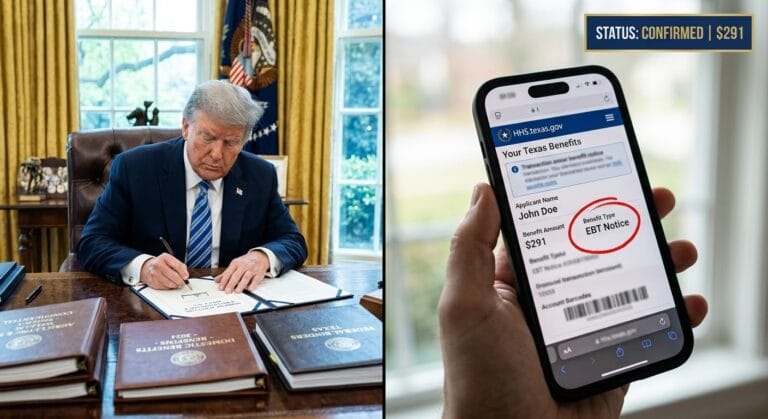
Point-of-sale networks across the Lone Star State are undergoing massive technological overhauls ahead of an unprecedented welfare policy shift. Beginning strictly on April 1, 2026, the standard $291 individual Supplemental Nutrition Assistance Program (SNAP) distribution will carry severe new purchasing restrictions. Texas residents relying on these EBT deposits will face immediate checkout denials if they attempt to purchase candy, soda, or specific sweetened beverages.
The systemic change stems from the aggressive implementation of Texas Senate Bill 379. This legislative maneuver, backed by a highly contested federal waiver secured through the Trump administration’s Department of Agriculture, forcibly alters the definition of eligible food items within the state. Texas represents a massive demographic of federal benefit recipients, making this $291 baseline restriction a critical focal point for national welfare reform. Institutional watchers note that retailers failing to update their barcode scanning algorithms will bear the brunt of the administrative friction at the register.
KEY TAKEAWAYS: THE APRIL 1 EBT SHIFT
- Target Amount: $291 (Maximum federal rate for a single-person household).
- Program Phase: April 2026 Texas Lone Star Card Reload Cycle.
- Notice Type: HHS Point-of-Sale Denial / SB 379 Enforcement.
- Critical Timeline: Statewide retail restrictions activate exactly on April 1, 2026.
Analyzing the Viral Claims
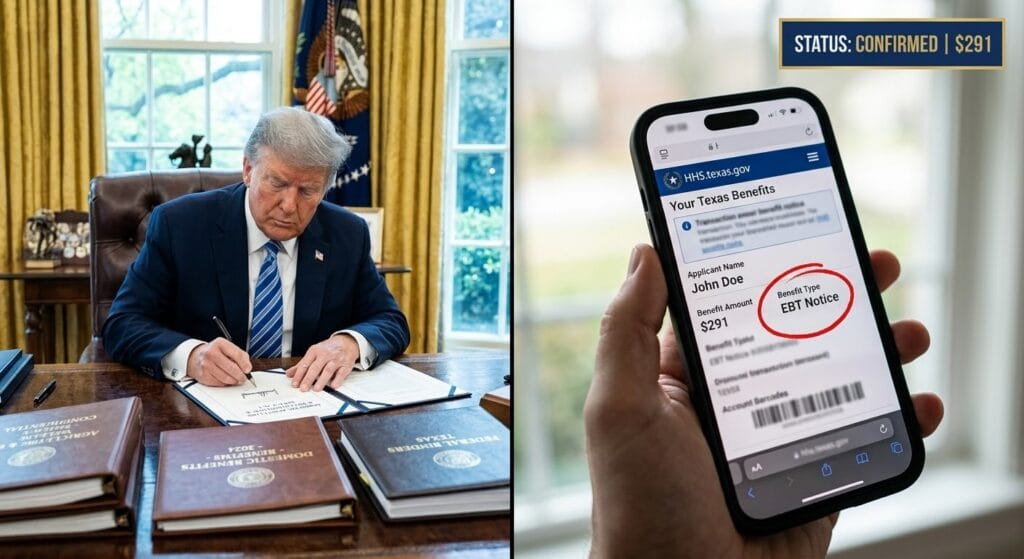
Reports circulating across digital networks have generated intense public confusion regarding a complete freeze of the $291 SNAP deposit if a beneficiary buys the wrong item. The reality of state and federal benefits administration requires a highly clinical examination. The $291 figure is not being reduced, nor are accounts being suspended for accidental barcode scans. This exact number represents the verified maximum standard payment for a single eligible individual, and those funds remain fully accessible for approved groceries.
Social media algorithms frequently conflate checkout denials with total account terminations. This creates a massive information gap that distorts public expectations. Health and Human Services officials confirm that the April 1 rollout is a structural point-of-sale barrier. If a shopper attempts to buy an energy drink or a chocolate bar, the cash register simply isolates that specific item and demands a secondary payment method. The EBT card will process the rest of the compliant nutritional items without prejudice.
Federal auditors maintain that the system is functioning exactly as designed under current executive policy frameworks. The restriction process is entirely dependent on retail compliance and digitized inventory coding. Analysts observe that Texas defines “sweetened drinks” strictly as nonalcoholic beverages containing five grams or more of added sugar, or any amount of artificial sweetener. Exemptions exist purely for milk-based products or juices exceeding a 50 percent natural volume threshold.
Eligibility & Regional Compliance
The distribution of federal food assistance now relies on strict adherence to these localized nutritional parameters. Texas EBT users must navigate the federal baseline while conforming to the newly activated state-level health mandates, fundamentally shifting how the $291 deposit functions in a retail environment.
| Category | Processing Requirement | POS Output |
| Nutritional Staples | Meats, vegetables, dairy, grains. | $291 Balance Applied |
| Sweetened Beverages | 5g+ added sugar or artificial sweeteners. | EBT Denial / Cash Required |
| Candy & Confections | Packaged sweets, glazed nuts, taffy. | EBT Denial / Cash Required |
Institutional Outlook
The broader administrative posture in Washington reflects a calculated pivot toward regulating the health outcomes of federal spending. The Trump administration has signaled a clear mandate to reshape domestic welfare, approving the Texas waiver to restrict junk food purchases while simultaneously tightening nutritional compliance metrics within the USDA. This dual-pronged approach aims to force taxpayer capital exclusively into nutrient-dense agricultural sectors, with Texas serving as the primary testing ground for this massive regulatory wave. Legislative frameworks currently active in the capital emphasize the absolute necessity of tracking dietary data in digital welfare administration.
Analysts observe that the exact April 1, 2026 timeline is a strategic operational benchmark for the state. It provides a necessary administrative baseline for the Texas Health and Human Services Commission to evaluate early purchasing data before the system expands further into the fiscal year. The heavy focus on Texas demographic data highlights the sheer volume of point-of-sale transactions occurring within regional grocery chains. The machinery of the federal benefits system prioritizes rapid liquidity, but now strictly filters that velocity through an approved nutritional matrix.
Agricultural policy experts note that the $291 EBT distribution is a direct byproduct of complex inflation metrics, yet its purchasing power is now intentionally narrowed. The intersection of these macroeconomic shifts generates specific retail barriers for massive beverage and snack conglomerates. If a corporate master file flags an unverified sweetener in a new product, the retail system immediately halts the EBT approval protocol to prevent improper state spending. The infrastructure demands absolute and continuous barcode verification from the sponsoring merchant.
PEOPLE ALSO ASK
Why is the exact figure of $291 linked to this Texas EBT update?
The $291 amount represents the maximum federal baseline payment for an individual receiving SNAP benefits in 2026. It is a statutory cap dictated by federal cost-of-living formulas, serving as the standard deposit that will now be subjected to the Senate Bill 379 nutritional restrictions.
Will my Texas Lone Star Card be frozen if I try to buy soda?
State processing systems utilize automated algorithms at the cash register to separate eligible and ineligible items. If the system detects a banned candy or sweetened beverage, it simply generates a denial for that specific item. The remaining $291 EBT balance remains fully active and available for compliant grocery purchases.
How does the Trump administration factor into this state-level policy?
While Senate Bill 379 is Texas legislation, state governments cannot alter SNAP purchasing rules without federal permission. The Trump administration’s USDA officially approved the waiver for Texas, granting the state the unprecedented authority to restrict how federal funds are spent at the local checkout counter.
CHECK OFFICIAL STATUS AT HHS.TEXAS.GOV
Institutional Disclaimer: This report provides a clinical journalistic analysis of current federal legislative actions, institutional processing timelines, and publicly available welfare data. The information presented is strictly for educational and news reporting purposes. This publication is not a legal or financial advisor. All administrative timelines, approved item lists, and processing codes are subject to adjustment by the Texas Health and Human Services Commission and the United States Department of Agriculture.

Evan Cole Editor-in-Chief | Breaking News & Public Policy
“From Washington to Wall Street, and Main Street to Hollywood—Evan Cole connects the dots.”
As the Editor-in-Chief at Newskilo, Evan leads a dynamic team of journalists dedicated to uncovering the truth behind the headlines. With over 15 years in digital media, Evan has a reputation for cutting through the noise.
While he is widely recognized for his deep analysis of U.S. fiscal policy (IRS & Stimulus), Evan’s expertise extends to global current events, corporate accountability, and cultural trends. Whether he is breaking down a complex government bill, exposing a tech giant’s failure, or analyzing the societal impact of a viral celebrity moment, Evan’s goal is simple: To tell the stories that shape our world with clarity, accuracy, and integrity.
Leave a Reply