
LAS VEGAS —
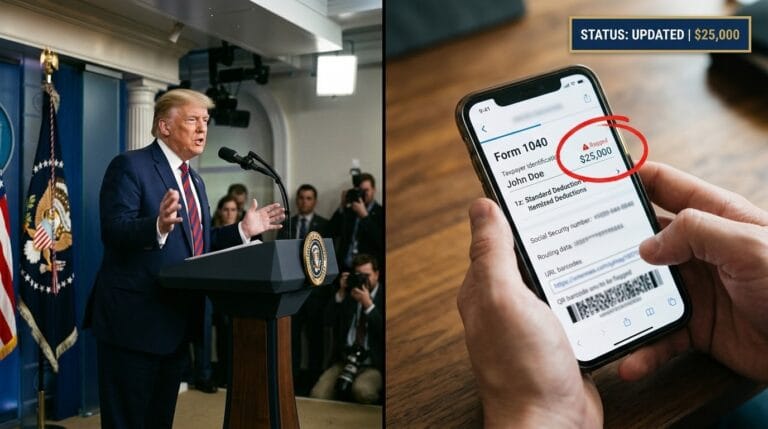
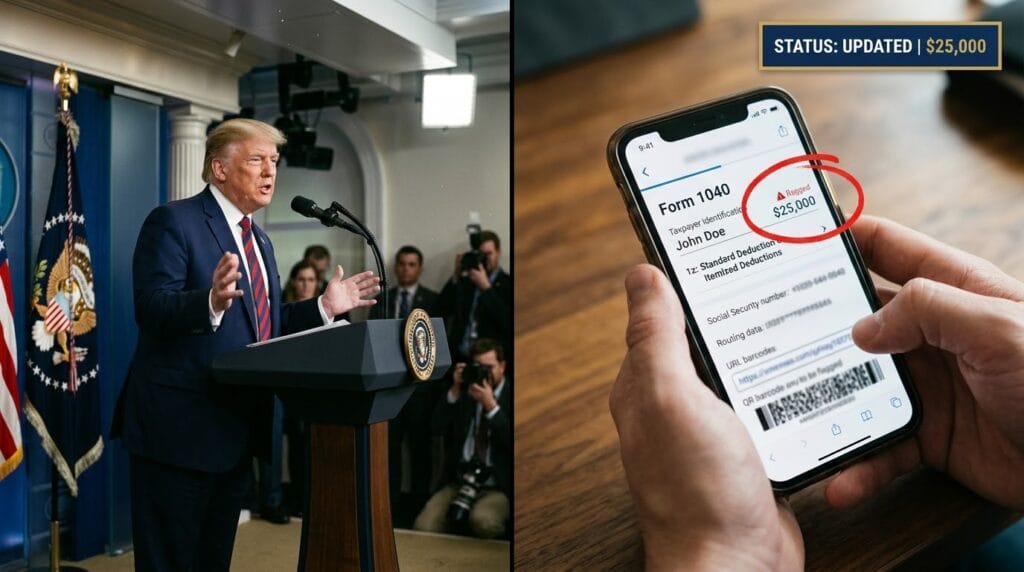
Across the casino floors and restaurant corridors of Nevada, hospitality workers are heavily scrutinizing Line 1z of their tax returns this week. The Treasury Department officially activated the reporting mechanisms for the highly anticipated “No Tax on Tips” provision ahead of the April 15 filing deadline. This framework, embedded within the sweeping One Big Beautiful Bill Act (OBBBA), establishes a rigid $25,000 federal income tax deduction for verified gratuities. Social media channels continue to broadcast conflicting interpretations of the law. The actual tax code dictates strict evidentiary standards for anyone attempting to alter their Form 1040 liabilities.
KEY TAKEAWAYS
- Amount: $25,000 maximum federal income tax exemption.
- Program: OBBBA Service Industry Tip Deduction.
- Notice Type: Form 1040 / Schedule 1 Adjustments.
- Timeline: Valid for the current tax season ending April 15.
Analyzing the Viral Claims
Digital platforms are flooded with assertions that all service industry income is now entirely tax-free. Financial analysts tracking the rollout explicitly refute this absolute narrative. The legislation enacted by the Trump administration creates a specific, capped carve-out rather than a blanket immunity.
Data published by the IRS confirms the exemption is legally capped at exactly $25,000 per individual filer. Any tip income exceeding this threshold remains subject to standard federal marginal tax brackets. The viral videos also routinely ignore the distinction between federal income tax and payroll obligations. Institutional guidelines show that while the $25,000 shields workers from income tax, these funds are still subject to FICA withholdings, meaning Medicare and Social Security taxes still apply. Nevada state revenue trackers report a surge in rejected returns from taxpayers who attempted to zero out their gross income entirely.
Eligibility & Regional Compliance
The burden of proof falls entirely on the taxpayer. The IRS requires meticulous daily logging of gratuities, typically reported to the employer via Form 4070 and reflected in Box 8 of a standard W-2. Undocumented cash tips hidden from employer payroll systems do not automatically qualify for the newly established deduction.
| Category | Requirement | Projected Amount |
| Federal Income Exemption | Documented W-2 tip income / Form 4070 | Up to $25,000 |
| Payroll Tax (FICA) | Subject to standard Medicare/SS withholding | $0 exempted |
| Eligible Professions | Recognized service and hospitality sectors | Varies by filing status |
| Documentation | Employer-verified tip reporting | Mandatory for deduction |
Institutional Outlook
The macroeconomic implementation of the $25,000 threshold represents a massive structural shift for the service economy. Policy architects within the Trump administration championed the measure as a direct stimulus for working-class voters in hospitality-heavy swing states like Nevada. By removing the federal income tax burden on a massive tranche of service income, the legislation attempts to inject immediate liquidity into local economies.
Federal oversight committees are currently monitoring the initial wave of filings to assess the actual deficit impact. Legislative analysts at the Treasury Department note that the strict $25,000 cap was a negotiated compromise designed to prevent high-end professionals—such as Wall Street consultants or luxury brokers—from reclassifying their standard performance bonuses as tax-exempt “tips.” The legal definition of a tip under the OBBBA strictly requires the payment to be voluntary, unnegotiated, and initiated by the customer.
The IRS is leveraging modernized automated systems to flag discrepancies in tip reporting. Internal memos suggest error-resolution departments expect a bottleneck as they process the new Schedule 1 attachments required to claim the exemption. Banking associations in Nevada observe that early filers who correctly documented their $25,000 deduction are receiving their standard refunds without delay. Those who attempt to claim the maximum deduction without corresponding W-2 tip documentation are triggering automatic CP2000 notices.
Tax policy experts view the mandatory documentation requirements as a dual-edged sword. While the $25,000 exemption provides unprecedented relief for compliant workers, it simultaneously forces the shadow economy into the light. The prospect of massive tax savings incentivizes workers to report every cash dollar to their employers. Regional economists project that this behavioral shift will drastically increase total reported taxable wages, paradoxically boosting Medicare and Social Security trust fund revenues even as federal income tax receipts from the sector decline. This complex revenue dynamic underscores the administration’s reliance on strict compliance parameters to balance the policy’s economic costs.
PEOPLE ALSO ASK
Does the $25,000 tip exemption apply to Medicare and Social Security taxes?
No. The legislation strictly exempts up to $25,000 of tip income from federal income taxes. The IRS mandates that all reported tips remain subject to standard FICA payroll taxes to fund Social Security and Medicare.
How do service workers actually claim the OBBBA tip deduction?
Taxpayers must report their total tip income as usual. They then claim the specific deduction, up to the $25,000 limit, on a newly designated line within Schedule 1 of their Form 1040. This reduces their adjusted gross income.
What happens if a worker earns more than the $25,000 limit in tips?
Any gratuities earned above the $25,000 ceiling are treated as standard taxable income. The Treasury Department applies the taxpayer’s normal marginal income tax rate to every dollar that exceeds the statutory cap.
CHECK OFFICIAL STATUS AT IRS.GOV
Disclaimer: This report provides a clinical analysis of federal tax legislation and institutional updates based on publicly available data. This content does not constitute financial, legal, or tax counsel. Taxpayers must consult certified professionals or official government resources regarding individual financial circumstances.

Evan Cole Editor-in-Chief | Breaking News & Public Policy
“From Washington to Wall Street, and Main Street to Hollywood—Evan Cole connects the dots.”
As the Editor-in-Chief at Newskilo, Evan leads a dynamic team of journalists dedicated to uncovering the truth behind the headlines. With over 15 years in digital media, Evan has a reputation for cutting through the noise.
While he is widely recognized for his deep analysis of U.S. fiscal policy (IRS & Stimulus), Evan’s expertise extends to global current events, corporate accountability, and cultural trends. Whether he is breaking down a complex government bill, exposing a tech giant’s failure, or analyzing the societal impact of a viral celebrity moment, Evan’s goal is simple: To tell the stories that shape our world with clarity, accuracy, and integrity.
Leave a Reply