
“The clock is running in this great-power competition, and success or failure will be measured in months, not years.” That is the stark reality check NASA Administrator Jared Isaacman just dropped on the entire aerospace industry.
NASA just completely ripped up its traditional, slow-moving playbook. During a massive “Ignition” event, the agency unveiled a radically accelerated timeline to establish an enduring American presence in space.
The goal isn’t just planting a flag anymore; it is about building a permanent lunar base and launching a nuclear-powered spacecraft before the end of the decade.
The Sudden Shift to a Permanent Moon Base
For years, the Artemis program felt like a cautious crawl back to the lunar surface. Now, NASA is shifting into hyperdrive to align with the urgency of the latest National Space Policy.
The agency is officially pausing the development of the Lunar Gateway space station in its current form. Instead, they are pouring all their resources directly into a phased, aggressive rollout of a permanent Moon base. Phase one kicks off with an unprecedented tempo of robotic deliveries and lunar terrain vehicles. By the time phase three rolls around, NASA plans to land heavy, semi-habitable infrastructure capable of supporting a long-duration human presence. They are even teaming up with international partners to bring pressurized rovers and multi-purpose habitats to the lunar dust.
Scrapping the Old Playbook for Faster Landings
NASA is no longer waiting for bespoke, legacy hardware to slowly come together. They are leaning heavily into the commercial sector to make frequent and affordable crewed missions a reality.
Starting in 2027, the agency is targeting at least one surface landing every single year. The ultimate goal is to ramp that cadence up to crewed landings every six months.
To pull this off, NASA is sending its own subject-matter experts directly into the factories of major vendors and subcontractors to solve problems and accelerate production on the spot.
The Secret Nuclear Spacecraft Heading to Mars
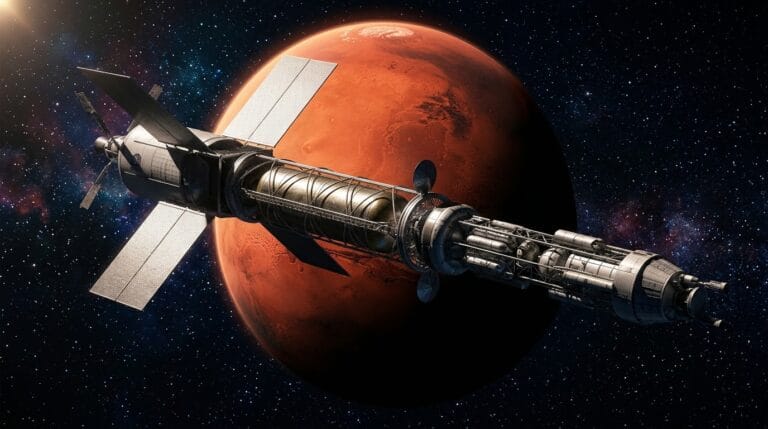
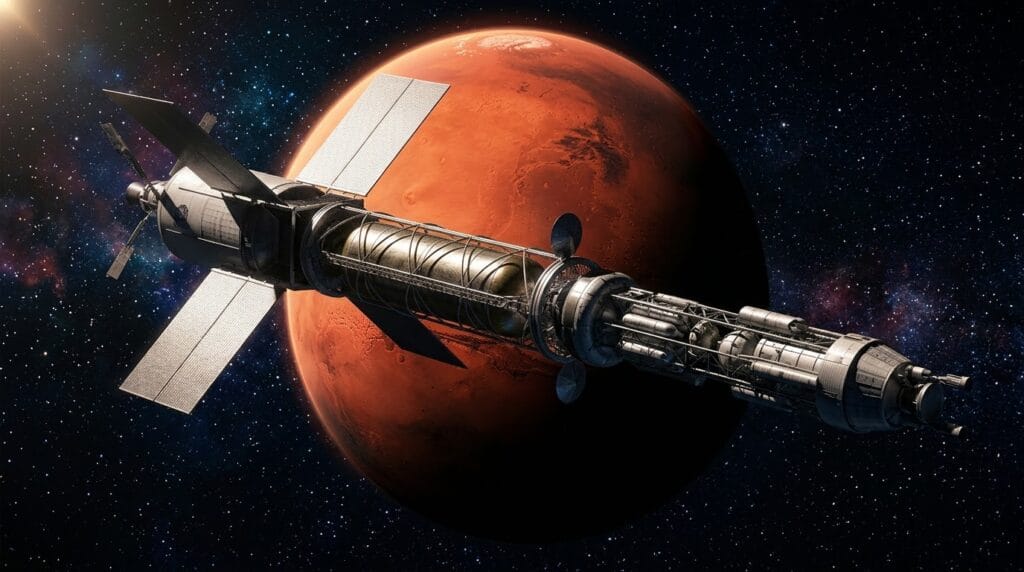
The most jaw-dropping reveal of the event goes far beyond the Moon. NASA officially announced the Space Reactor-1 Freedom, the very first nuclear-powered interplanetary spacecraft.
This isn’t a distant pipe dream. NASA intends to launch this nuclear-electric titan to Mars by 2028. When it reaches the Red Planet, it will deploy a payload of Ingenuity-class helicopters to scout the alien terrain. This mission is the ultimate test for sustained exploration. By proving that nuclear hardware can safely transport heavy mass across deep space, NASA is unlocking the exact technology needed to eventually send humans to the outer edges of our solar system.
What Happens to the International Space Station?
While the agency locks its sights on deep space, it hasn’t forgotten about the International Space Station (ISS). The $100 billion orbital laboratory has been the crown jewel of low Earth orbit for over two decades, but it cannot safely operate forever. To prevent any dangerous gaps in American orbital presence, NASA is actively transitioning toward a commercial ecosystem. They are proposing a government-owned Core Module that attaches directly to the ISS. Over time, private companies will attach their own commercial modules, eventually detaching them to fly freely as independent space stations.
The new space race is officially running on a wildly accelerated clock. NASA is aggressively demanding that the aerospace industry move faster, think bigger, and stop letting bureaucracy get in the way of human survival among the stars.
Are you ready for a permanent lunar colony, or is a nuclear spacecraft heading to Mars the real game-changer? Let us know your thoughts in the comments below!

Evan Cole Editor-in-Chief | Breaking News & Public Policy
“From Washington to Wall Street, and Main Street to Hollywood—Evan Cole connects the dots.”
As the Editor-in-Chief at Newskilo, Evan leads a dynamic team of journalists dedicated to uncovering the truth behind the headlines. With over 15 years in digital media, Evan has a reputation for cutting through the noise.
While he is widely recognized for his deep analysis of U.S. fiscal policy (IRS & Stimulus), Evan’s expertise extends to global current events, corporate accountability, and cultural trends. Whether he is breaking down a complex government bill, exposing a tech giant’s failure, or analyzing the societal impact of a viral celebrity moment, Evan’s goal is simple: To tell the stories that shape our world with clarity, accuracy, and integrity.
Leave a Reply